
Liquidity Grab: How to Spot a Stop Hunt
Last updated September 4, 2026
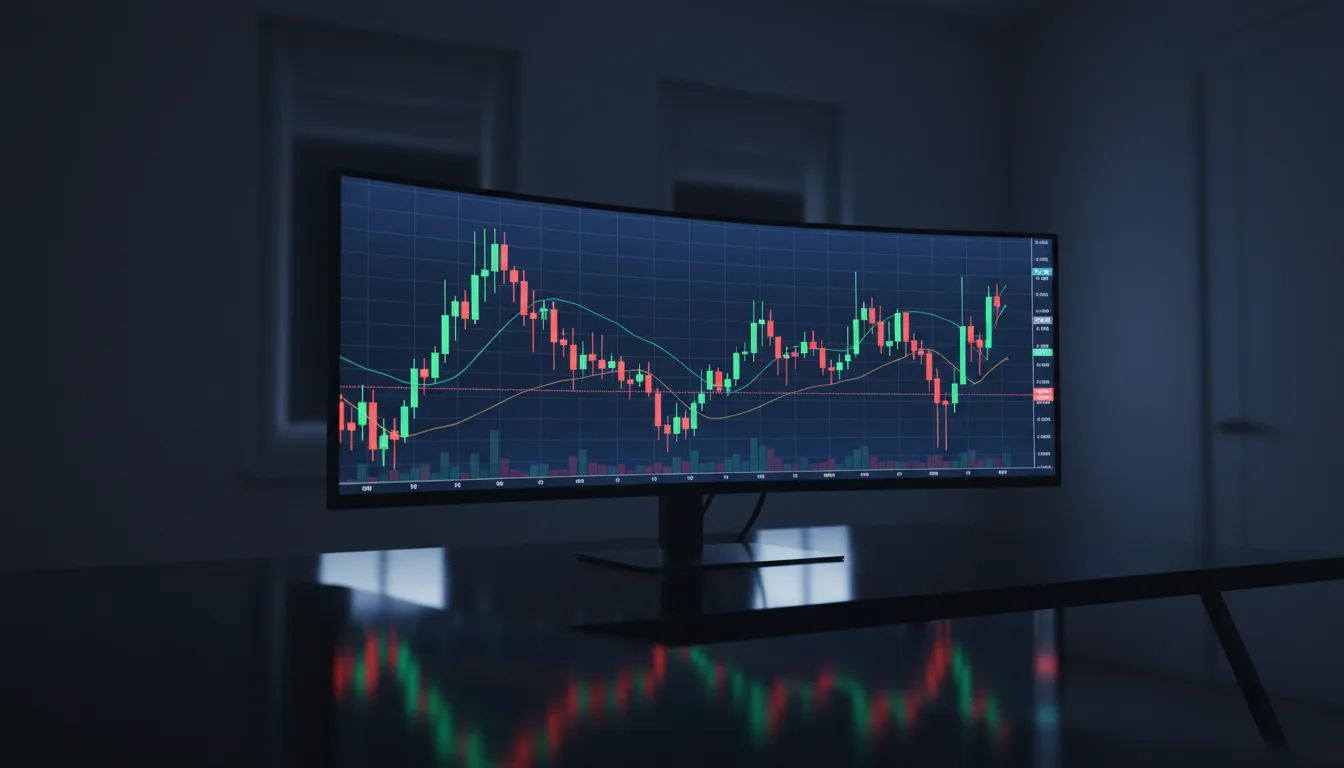
A liquidity grab is a sharp push just beyond an obvious high or low that triggers the stop orders resting there, then reverses back inside. Also called a stop hunt or a sweep, it is identified by a long wick through the level and a close back on the original side.
Key takeaway
A liquidity grab (or stop hunt) spikes price just past an obvious level, swing high, swing low, round number, to trigger the stops clustered there, then reverses. The triggered stops become market orders that provide liquidity for larger players. The tell is a quick poke beyond the level followed by a fast rejection back inside, often a long wick, rather than a clean, sustained breakout.
What is a liquidity grab?
A liquidity grab is a price move designed, or at least functioning, to reach the orders resting just beyond a visible level and trigger them, then reverse. In market structure terms, the stops that traders place above swing highs or below swing lows represent pools of liquidity: when triggered, those stops become market orders, supplying the volume that large participants need to fill sizable positions without moving price against themselves. The grab is the act of reaching that pool.
The concept comes largely from smart money concepts (SMC), which frame markets as a contest over liquidity. Resting orders, especially clustered stop-losses, are fuel; a liquidity grab is the market reaching for that fuel. Whether you view it as deliberate by large players or simply an emergent feature of where stops sit, the practical pattern is the same: price briefly violates an obvious level, sweeps the stops, and turns. Our smart money concepts guide covers the broader framework this sits inside.
How does a stop hunt work?
A stop hunt is the same event seen from the perspective of the stops being hit. Traders cluster their stop-losses in predictable places, just above a recent high for shorts, just below a recent low for longs, so those zones hold a concentration of pending orders. When price reaches them, the stops trigger as market orders, creating a burst of buying (above) or selling (below) that briefly extends the move.
That burst is exactly the liquidity a large participant wants to trade against. A big buyer who needs to accumulate without driving price up can let a dip sweep the stops below a low, absorbing the panicked selling, then let price recover. From the outside it looks like price dipped, triggered stops, and bounced, which is precisely what a stop hunt is. The triggered traders provided the liquidity for someone else's entry. This dynamic is why placing a stop at the obvious level can mean getting shaken out right before the move you anticipated.
Where do liquidity grabs happen?
Liquidity grabs occur where stops predictably cluster, which makes those zones the usual hunting grounds. The clearest are just beyond recent swing highs and lows, the levels every chart reader can see, where breakout traders place entries and trend traders place stops. Round numbers (like 100 or 1.2000 in forex) attract orders too, as do well-known support and resistance levels that have been tested before.
Equal highs or equal lows are especially magnetic. When price forms two or more highs at nearly the same level, stops and breakout orders pile up just above them, creating an obvious pool that often gets swept before any real move. The same applies to equal lows. The chart below sketches a sweep of a swing low followed by a reversal.
How do you spot a liquidity grab?
Spotting a liquidity grab comes down to distinguishing a sweep from a genuine breakout. The sweep shows a quick spike beyond an obvious level, often on a burst of volume, immediately followed by a sharp rejection back inside the prior range. On a candlestick chart this frequently prints as a long wick poking through the level with a body that closes back on the original side, signaling the breakout failed and price was rejected.
A real breakout, by contrast, pushes through the level and holds, building above it with follow-through rather than snapping back. The key difference is what happens after the level breaks: sustained continuation suggests a true breakout, while an immediate reversal suggests a grab. Watching for the rejection, and for the move to occur at a spot where stops obviously cluster, is how you tell them apart in real time. This is closely related to the false-breakout problem in breakout trading strategy.
Placing your stop exactly at the obvious level, just under a swing low or over a swing high, puts it in the most-hunted zone. Consider giving stops a little room beyond the obvious level, sized within your risk, so a routine sweep does not eject you before your idea plays out.
Can an AI chart reader identify a liquidity grab?
The visual signature is well defined, so an image-based reader does the detection part credibly: it can find the equal highs and equal lows in a screenshot, spot the candle whose wick pierced one of them, and confirm that the body closed back inside. It can also state the thing traders talk themselves out of, which is whether the candle actually closed beyond the level or only wicked through it.
What it cannot supply is where the liquidity really was. Stop clusters are a claim about other people's orders, and no chart image contains them, so any statement about how much liquidity sat above a high is inference dressed as observation. It also cannot see the older equal highs outside the crop, which are usually the more meaningful pools, and it cannot know that the sweep happened on a data release rather than on positioning. Ask it to mark the wicks and the levels they pierced, and keep the interpretation of why for yourself, which is how the AI chart analysis workflow is meant to be used.
How do you trade around liquidity grabs?
You trade around liquidity grabs mainly by adjusting where you place stops and how you read failed breakouts. Since the obvious level is where stops get hunted, placing yours slightly beyond it, while keeping the position sized so the wider stop still respects your risk, reduces the chance of being swept out by a routine grab. The goal is not to eliminate the stop but to move it out of the most crowded zone.
The sweep can also be a setup in its own right. A confirmed liquidity grab, a sweep beyond a level followed by a clear rejection back inside, can signal that the breakout has failed and price may move in the opposite direction, offering an entry with a defined invalidation just beyond the sweep's extreme. This is advanced reading and prone to false signals, so it pairs best with other confirmation and strict risk control. Whatever you do, treat the grab as information about where liquidity sits, and let it refine your stops and entries rather than tempt you into chasing the initial spike. It connects directly to order blocks explained and fair value gaps and imbalance. In Smart Money Concepts, a minor level engineered to attract exactly those orders is called an inducement, and a sweep that then produces a break of structure in the opposite direction is the classic reversal sequence.
A practical mindset shift helps here: instead of seeing the obvious level as a place to enter on a breakout, see it as a place where breakout traders will be trapped. That reframing changes your behavior in useful ways. You become skeptical of clean breaks of heavily watched levels, you give your own stops room beyond the crowd, and you start to anticipate the snap-back that catches the impatient. None of this is about predicting every sweep; it is about not being the predictable liquidity that larger participants feed on. Reading where the obvious stops sit is, in a sense, reading where you should not put yours.
Educational only. Not financial advice. Liquidity grabs and stop hunts are descriptive concepts, not guaranteed patterns, and can produce false signals. Examples use illustrative data. Always do your own research.
Frequently asked questions
- What is a liquidity grab?
- A liquidity grab is a sharp move that pushes price just beyond an obvious level to trigger clustered stop orders, then reverses. It sweeps the liquidity sitting at those stops, filling large orders, before price moves in the opposite direction.
- What is a stop hunt?
- A stop hunt is the same idea described from the trader's side: price spikes to the level where many stop-losses sit, triggers them, and then reverses. The stops becoming market orders provide the liquidity that larger participants trade against.
- Where do liquidity grabs happen?
- They happen just beyond obvious levels where stops cluster: above recent swing highs, below swing lows, and around round numbers and well-known support or resistance. These are the predictable spots where retail stops gather.
- How do you spot a liquidity grab?
- Look for a quick spike beyond a clear level on higher volume, followed by a fast rejection back inside the range, often a long wick. The reversal after the sweep, rather than a sustained breakout, is the tell.
- Is a liquidity grab the same as a false breakout?
- They overlap. A liquidity grab is a false breakout viewed through the lens of stop orders: price breaks a level only to trigger stops and reverse. Smart money concepts frame it as a deliberate sweep of resting liquidity.
- How do you tell a liquidity grab from a real breakout?
- The close decides it. A grab wicks beyond the level and closes back inside, usually within one or two candles, and it is often followed by an energetic move the other way. A real break closes beyond the level and holds there, and the follow-through comes in the same direction as the break.
- Where does liquidity sit on a chart?
- Above equal highs and below equal lows, beyond obvious swing points, above and below the previous day's or week's extremes, and beyond the high and low of a session range. Those are the places retail stops and breakout orders cluster, which is what makes them worth sweeping.
- Is a liquidity grab the same as inducement?
- No. Inducement is the level that attracted the orders, the bait. The liquidity grab is the move that takes them. Traders mark inducement in advance and expect the grab, rather than identifying either one only after the fact.
- Does a liquidity grab always lead to a reversal?
- No. Plenty of sweeps are simply the start of a genuine break that happened to begin with a wick, and a level can be swept twice before price goes through it. The sweep is a reason to wait for structure to confirm, not a reversal signal on its own.
About this byline
Markets & product research
The Bullynx editorial team researches and reviews the trading concepts, indicators, and tools we write about. Our articles are educational and are reviewed for accuracy before publishing. They are not financial advice.
Seeing this setup on your own chart? Upload the screenshot and Lynx AI maps the structure, the levels that matter, and a long or short bias, with what would invalidate it.
Keep reading
- Smart Money Concepts (SMC): A Plain-English GuideChart Reading & Patterns
- Best Timeframe for Day Trading ChartsChart Reading & Patterns
- Best Timeframe for Swing TradingChart Reading & Patterns
- Break of Structure in Trading: How to Spot a Valid BOSChart Reading & Patterns
- Support and Resistance: Find Key LevelsChart Reading & Patterns
- Support and Resistance in Crypto: Drawing LevelsChart Reading & Patterns
Educational only. Not financial advice. NFA. Bullynx is not a registered investment adviser or broker-dealer. Trading and investing involve significant risk of loss. Read the full risk disclosure or how this article was researched and reviewed.